Ann has invited Eri,
アンはエリを誘った、
a new exchange student,
新しくきた交換留学生の、
to go hiking in the woods
森へハイキングに行こうと
with her.
彼女といっしょに。
アンは、新しくきた交換留学生のエリを、森でのハイキングにいっしょに行こうと誘った。
exchange student 交換留学生
Ann has invited Eri, a new exchange student, to go hiking in the woods with her.
Eri, look at these!
エリ、これ見て!
Wow, what are they?
わあ、それ何?
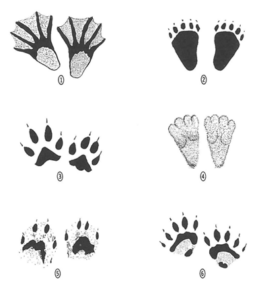
They’re animal tracks.
動物の足跡よ。
track 跡
Yeah, I can see that,
ええ、それはわかるけど、
but what kind of animal?
でもどんな動物なの?
ええ、それはわかるけど、でもどんな動物なの?
Yeah, I can see that, but what kind of animal?
A wolf, probably.
たぶんオオカミね。
How do you know?
どうしてわかるの?
Well, look at the top half.
えっとね。上半分を見て。
Can you see the four claws?
4本の爪が見えるでしょう?
Also,the main part of the foot
それに、足の中心部分が
makes a triangle-shape.
三角形になっているの。
This is typical of wolves.
これはオオカミの特徴よ。
claw 動物の爪
typical 典型的な
Well, look at the top half. Can you see the four claws? Also, the main part of the foot makes a triangle-shape. This is typical of wolves.
Amazing! Wait, Ann,
すごい!待って、アン、
look at these!
これ見て!
What are they?
これ何?
Amazing! Wait, Ann, look at these! What are they?
Hmm… I think
うーん…思うんだけど
they’re from a type of rabbit.
これはウサギの一種のものね。
うーん…これはウサギの一種のものだと思うわ。
Hmm… I think they’re from a type of rabbit.
Really?
本当?
They look like a duck’s footprints
私にはアヒルの足跡みたいに見えるけど
to me.
私には。
本当?私にはアヒルの足跡みたいに見えるけど。
footprint 足跡
Really? They look like a duck’s footprints to me.
Yeah, they do.
そうね、そう見えるわね。
But ducks’ feet
でもアヒルの足は
don’t have rounded toes.
丸いつま先じゃないの。
They’re webbed.
webbedなのよ。
そうね、そう見えるわね。でもアヒルの足は丸いつま先じゃなくて、webbedなのよ。
rounded 丸い
Yeah, they do. But ducks’ feet don’t have rounded toes. They’re webbed.
Webbed?
Oh, that means
ああ、それはつまり
the toes are connected by skin
つま先が皮膚でつながっているということよ。
—like a frog, for example.
たとえばカエルみたいにね。
ああ、それはつまり、つま先が皮膚でつながっているということよ。たとえばカエルみたいにね。
Oh, that means the toes are connected by skin—like a frog, for example.
I see…
なるほど…
but the entire shape
でも全体の形は
is like a duck’s print.
アヒルの足跡みたいね。
なるほど…でも全体の形はアヒルの足跡みたいね。
entire 全体
I see… but the entire shape is like a duck’s print.
Actually, it’s shaped like a snowshoe.
本当のところは、かんじきの形をしているの。
These prints are from a snowshoe hare.
この足跡は、snowshoe hareのものよ。
本当のところは、かんじきの形をしているの。この足跡はsnowshoe hareのものよ。
Actually, it’s shaped like a snowshoe. These prints are from a snowshoe hare.
Why is it called that?
なぜそう呼ばれているの?
Is it a “hairy” animal?
「毛深い」動物なの?
Why is it called that? Is it a “hairy” animal?
No, not that kind of hair!
いいえ、そのヘアじゃないの!
A hare looks like a rabbit.
ヘア(hare)はウサギに似た動物のことよ。
And a snowshoe is a large, flat thingそ
れから、スノーシューというのは大きくて平らなもので、
{we wear
私たちが身につける
for walking on snow}.
雪の上を歩くために。
This type of hare’s foot
この種のウサギの足は
has the same shape,
同じ形をしている
so it’s called a snowshoe hare.
だからスノーシューヘアと呼ばれているの。
いいえ、そのヘアじゃないの!ヘア(hare)はウサギに似た動物のことよ。それから、スノーシューというのは雪の上を歩くために履く大きくて平らな道具のこと。この種のウサギの足が同じ形をしているから、snowshoe hareと呼ばれているの。
pick up 拾う、得る、選ぶ
No, not that kind of hair! A hare looks like a rabbit. And a snowshoe is a large, flat thing we wear for walking on snow. This type of hare’s foot has the same shape, so it’s called a snowshoe hare.
I see.
なるほどね。
Now look at these over here.
今度はこっちを見て。
Can you see any differences
違いがわかる?
between these
これらと
and the first ones
最初のものとの
{we saw}?
私たちが見た?
今度はこっちを見て。これらと、最初に見たものとの違いがわかる?
Now look at these over here. Can you see any differences between these and the first ones we saw?
Umm… they look like a wolf’s,
うーん…オオカミのに似ているけど、
but they have five claws,
でも爪が5本あって、
not four.
4本じゃないわ。
うーん…オオカミのに似ているけど、爪が4本じゃなくて5本あるわ。
Umm… they look like a wolf’s, but they have five claws, not four.
Right!
その通り!
These belong to a wolverine,
これはクズリのものよ、
a different animal.
別の動物なの。
The other difference
もう一つの違いは
between the footprints
足跡の間の
is the shape of the main part.
中心部分の形にあるの。
その通り!これはクズリという別の動物のものよ。足跡のもう一つの違いは、中心部分の形にあるの。
Right! These belong to a wolverine, a different animal. The other difference between the footprints is the shape of the main part.
I see,
なるほど、
instead of one big triangle-shape,
大きな三角形一つの代わりに、
this one has two separate shapes.
これは2つに分かれた形をしているのね。
なるほど、大きな三角形が一つあるのではなく、これは2つに分かれた形をしているのね。
instead of ~の代わりに
I see, instead of one big triangle-shape, this one has two separate shapes.
Also,
それから、
it’s much more rounded at the top,
上の部分がずっと丸くなっているの、
just under the claws.
ちょうど爪の下のところが。
The other ones were more pointed.
さっきのはもっと尖っていたわね。
それから、爪のすぐ下にあたる上の部分が、ずっと丸くなっているの。さっきのはもっと尖っていたわね。
pointed 尖っている
Also, it’s much more rounded at the top, just under the claws. The other ones were more pointed.
Gosh,
すごい、
you know so much
あなたはとても詳しいのね
about this stuff.
こういうことについて。
すごい、あなたはこういうことに本当に詳しいのね。
Gosh, you know so much about this stuff.
I just picked it up
ただ聞きかじっただけよ
from my uncle.
おじから。
He likes to look for mushrooms
おじはマッシュルームを探すのが好きで
in the woods
森の中で
and needs to know
知る必要があるの
what animals are around—
どんな動物が近くにいるかを、
just to be on the safe side.
念のために。
おじから聞きかじっただけよ。おじは森でマッシュルームを探すのが好きで、念のためにどんな動物が近くにいるか知っておく必要があるの。
to be on the safe side 安全のために、用心して
I just picked it up from my uncle. He likes to look for mushrooms in the woods and needs to know what animals are around—just to be on the safe side.
Wow,
へえ、
I’d like to meet him
彼に会ってみたいわ
one day.
いつか。
へえ、いつか彼に会ってみたいわ。
Wow, I’d like to meet him one day.
C
[ 42 ]
①
Ann learned about the footprints of wild animals
アンは野生動物の足跡について学んだ
on her own.
自分で。
アンは野生動物の足跡のことを自分で学んだ。
Ann learned about the footprints of wild animals on her own.
②
Ann’s uncle lives
アンのおじさんは住んでいる
on the safe side of the woods.
森の安全な側に。
アンのおじさんは森の安全なところに住んでいる。
Ann’s uncle lives on the safe side of the woods.
③
The number of claws is important
爪の数が重要である
in identifying a wolf’s footprints.
オオカミの足跡を特定するのに。
オオカミの足跡を特定するのには、爪の数が重要である。
claw 動物の爪
identify 特定する
The number of claws is important in identifying a wolf’s footprints.
④
Young wolves are called wolverines.
幼いオオカミはクズリ(wolverine)と呼ばれる。
幼いオオカミはクズリ(wolverine)と呼ばれる。
Young wolves are called wolverines.
[ 43 ]
①
Ann picked up the tracks of a duck
アンはアヒルの足跡をたどった
outside her uncle’s house.
おじさんの家の外で。
アンはおじさんの家の外でアヒルの足跡をたどった。
pick up 拾う、得る、選ぶ
track 跡
Ann picked up the tracks of a duck outside her uncle’s house.
②
Ann’s uncle patrols the woods
アンのおじさんは森を見回っている
to protect his mushrooms
自分のマッシュルームを守るために
from wild animals.
野生動物から。
アンのおじさんは野生動物から自分のマッシュルームを守るために森を見回っている。
Ann’s uncle patrols the woods to protect his mushrooms from wild animals.
③
On their way,
途中で、
Eri and Ann found tracks
エリとアンは足跡を見つけた
of three different animals.
3種類の違った動物の。
エリとアンは途中で3種類の違った動物の足跡を見つけた。
On their way, Eri and Ann found tracks of three different animals.
④
People wear snowshoes in winter
人々は冬にかんじきをはく
to keep their feet warm.
足を暖かくしておくために。
人々は、足を暖かくしておくために冬にかんじきをはく。
People wear snowshoes in winter to keep their feet warm.
Ann has invited Eri, a new exchange student, to go hiking in the woods with her.
Ann: Eri, look at these!
Eri: Wow, what are they?
Ann: They’re animal tracks.
Eri: Yeah, I can see that, but what kind of animal?
Ann: A wolf, probably.
Eri: How do you know?
Ann: Well, look at the top half. Can you see the four claws? Also, the main part of the foot makes a triangle-shape. This is typical of wolves.
Eri: Amazing! Wait, Ann, look at these! What are they?
Ann: Hmm… I think they’re from a type of rabbit.
Eri: Really? They look like a duck’s footprints to me.
Ann: Yeah, they do. But ducks’ feet don’t have rounded toes. They’re webbed.
Eri: Webbed?
Ann: Oh, that means the toes are connected by skin—like a frog, for example.
Eri: I see… but the entire shape is like a duck’s print.
Ann: Actually, it’s shaped like a snowshoe. These prints are from a snowshoe hare.
Eri: Why is it called that? Is it a “hairy” animal?
Ann: No, not that kind of hair! A hare looks like a rabbit. And a snowshoe is a large, flat thing we wear for walking on snow. This type of hare’s foot has the same shape, so it’s called a snowshoe hare.
Eri: I see.
Ann: Now look at these over here. Can you see any differences between these and the first ones we saw?
Eri: Umm… they look like a wolf’s, but they have five claws, not four.
Ann: Right! These belong to a wolverine, a different animal. The other difference between the footprints is the shape of the main part.
Eri: I see, instead of one big triangle-shape, this one has two separate shapes.
Ann: Also, it’s much more rounded at the top, just under the claws. The other ones were more pointed.
Eri: Gosh, you know so much about this stuff.
Ann: I just picked it up from my uncle. He likes to look for mushrooms in the woods and needs to know what animals are around—just to be on the safe side.
Eri: Wow, I’d like to meet him one day.
[ 42 ]
① Ann learned about the footprints of wild animals on her own.
② Ann’s uncle lives on the safe side of the woods.
③ The number of claws is important in identifying a wolf’s footprints.
④ Young wolves are called wolverines.
[ 43 ]
① Ann picked up the tracks of a duck outside her uncle’s house.
② Ann’s uncle patrols the woods to protect his mushrooms from wild animals.
③ On their way, Eri and Ann found tracks of three different animals.
④ People wear snowshoes in winter to keep their feet warm.