How do people’s preferences for styles
人々のスタイルの好みは
change across different generations?
世代によってどのように変化するのだろうか?
人々のスタイルの好みは、世代によってどのように変化するのだろうか?
preference 好み
generation 世代
How do people’s preferences for styles change across different generations?
In order to investigate
調査するために
how different age groups
どのように異なる年齢層が
view hair fashion, a survey was conducted
髪型のファッションを見ているかを、調査が行われた
in Canada.
カナダで。
さまざまな年齢層が髪型のファッションをどう見ているかを調べるために、カナダで調査が行われた。
investigate 調査する
view 見る
survey 調査、アンケート
conduct 行う
In order to investigate how different age groups view hair fashion, a survey was conducted in Canada.
The research data were gathered
調査データは集められた
in the following way: People across the country
次のような方法で:国中の人々が
were randomly selected
無作為に選ばれた
with the use of telephone books.
電話帳を使って。
調査データは次の方法で集められた。国内の人々が電話帳を使って無作為に選ばれたのである。
following 次の
The research data were gathered in the following way: People across the country were randomly selected with the use of telephone books.
They were called
彼らは電話をかけられた
and invited to join the study
そして調査への参加を誘われた
if they were in their (1) late teens, (2) late thirties, or (3) late fifties.
もし彼らが(1)10代後半、(2)30代後半、(3)50代後半であれば。
彼らは電話をかけられ、(1)10代後半、(2)30代後半、(3)50代後半のいずれかであれば調査への参加を誘われた。
late 後半
They were called and invited to join the study if they were in their (1) late teens, (2) late thirties, or (3) late fifties.
After 600 people agreed to participate,
600人が参加に同意した後、
the researchers interviewed them at home,
研究者たちは彼らの自宅で面接を行った
while showing them
彼らに見せながら
a series of photographs of male faces,
男性の顔の一連の写真を
each of which featured a different hairstyle.
それぞれが異なる髪型を特徴としていた。
600人が参加に同意した後、研究者たちは彼らを自宅で面接し、それぞれ異なる髪型をした男性の顔写真を一連見せた。
participate 参加する
interview 面接する
male 男性の
feature (特徴を)表す
After 600 people agreed to participate, the researchers interviewed them at home, while showing them a series of photographs of male faces, each of which featured a different hairstyle.
The researchers were interested
研究者たちは興味を持っていた
in examining
調べることに
how much the three generations favor
3つの世代がどれくらい好むかを
the following five hairstyles.
次の5つの髪型を。
研究者たちは、3つの世代が次の5つの髪型をどれくらい好むかを調べることに興味を持っていた。
examine 吟味する
generation 世代
favor 好む
following 次の
The researchers were interested in examining how much the three generations favor the following five hairstyles.
Among the five hairstyles was
5つの髪型の中には
one commonly found in the 1950s. It was called the “crew cut”
1950年代によく見られたものがあった。それは「クルーカット」と呼ばれ、
, which was closely clipped hair
それは短く刈り込まれた髪であった
with a flat top.
上部が平らな。
5つの髪型の中には1950年代によく見られたものがあり、それは上部が平らに短く刈り込まれた「クルーカット」と呼ばれるものだった。
clip 刈る
Among the five hairstyles was one commonly found in the 1950s. It was called the “crew cut”, which was closely clipped hair with a flat top.
The style
そのスタイルは
selected to represent the early 1960s
1960年代前半を代表するものとして選ばれた
was common
よく見られた
among rock and roll groups.
ロックンロールのグループの間で。
1960年代前半を代表するものとして選ばれたスタイルは、ロックンロールのグループの間でよく見られた。
represent 代表する
The style selected to represent the early 1960s was common among rock and roll groups.
It featured hair cut
それは切られた髪を特徴としていた
evenly across the forehead
額を水平に横切るように
with just enough to cover
覆うのにちょうど十分な長さで
half of each ear.
それぞれの耳の半分を。
それは額を水平に横切るように切られ、両耳の半分をちょうど覆うくらいの髪型を特徴としていた。
forehead ひたい
feature (特徴を)表す
It featured hair cut evenly across the forehead with just enough to cover half of each ear.
Hair that was not cut at all
まったく切られなかった髪は
was fashionable
流行していた
in the late 1960s.
1960年代後半には。
1960年代後半には、まったく切らない髪型が流行していた。
late 後半
Hair that was not cut at all was fashionable in the late 1960s.
In this period,
この時代には
hair down to the shoulders
肩まで届く髪も
was not uncommon.
珍しくなかった。
この時代には、肩まで届く髪も珍しくなかった。
In this period, hair down to the shoulders was not uncommon.
The early 1970s were represented
1970年代前半を代表していたのは
by curled hair
巻き毛だった
which was brushed up
それは上にとかし上げられ
into a high, soft and woolly bush.
高く柔らかくもじゃもじゃとした茂みのようになっていた。
1970年代前半を代表していたのは、高く柔らかくもじゃもじゃの茂みのように上にとかし上げられた巻き毛だった。
represent 代表する
The early 1970s were represented by curled hair which was brushed up into a high, soft and woolly bush.
The hairstyle
その髪型は
associated with the late 1970s
1970年代後半に関連する
was shorter
より短かった
than that in the early 1970s.
1970年代前半のものよりも。
1970年代後半に関連する髪型は、1970年代前半のものより短かった。
associated with… ~と関連した
late 後半
The hairstyle associated with the late 1970s was shorter than that in the early 1970s.
The hair was brushed down
髪はとかし下げられ
to cover the ears and the sides of the face. This was the “disco” style.
耳と顔の側面を覆うようにされた。これが「ディスコ」スタイルだった。
髪は耳と顔の側面を覆うようにとかし下げられ、これが「ディスコ」スタイルだった。
The hair was brushed down to cover the ears and the sides of the face. This was the “disco” style.
The charts below indicate
下のグラフは示している
the percentages of each hairstyle
それぞれの髪型の割合を
chosen by people
人々によって選ばれた
in the three age groups.
3つの年齢層の。
下のグラフは、3つの年齢層の人々によって選ばれたそれぞれの髪型の割合を示している。
indicate 示す
The charts below indicate the percentages of each hairstyle chosen by people in the three age groups.
Two major findings
2つの主要な発見が
came out of the survey.
その調査から得られた。
その調査からは2つの主要な発見が得られた。
finding 発見
survey 調査
Two major findings came out of the survey.
The first one
最初のものは
was that particular hairstyles were preferred
特定の髪型が好まれたということだった
to varying degrees.
さまざまな程度で。
最初の発見は、特定の髪型がさまざまな程度で好まれたということだった。
vary 変わる
degree 程度
The first one was that particular hairstyles were preferred to varying degrees.
The crew cut
「クルーカット」は
was popular
人気があった
in all three groups.
3つのグループすべてで。
「クルーカット」は3つのグループすべてで人気があった。
The crew cut was popular in all three groups.
The least favored hairstyle,
最も好まれなかった髪型は
in contrast,
対照的に
was the “bushy” style.
「もじゃもじゃ」スタイルだった。
対照的に、最も好まれなかった髪型は「もじゃもじゃ」スタイルだった。
favor 好む
in contrast 対照的に
The least favored hairstyle, in contrast, was the “bushy” style.
The disco style was chosen
「ディスコ」スタイルは選ばれた
as the second most favored hairstyle
2番目に好まれる髪型として
by the oldest group,
最年長のグループによって
although this style was not so popular
このスタイルはあまり人気がなかったが
among people in their late thirties.
30代後半の人々の間では。
「ディスコ」スタイルは最年長のグループによって2番目に好まれる髪型として選ばれたが、30代後半の人々の間ではあまり人気がなかった。
late 後半
The disco style was chosen as the second most favored hairstyle by the oldest group, although this style was not so popular among people in their late thirties.
Long hair
長い髪は
turned out to be unpopular
不人気であることがわかった
among people in their late fifties.
50代後半の人々の間で。
長い髪は50代後半の人々の間では不人気であることがわかった。
turn out to be ~であるとわかる
late 後半
Long hair turned out to be unpopular among people in their late fifties.
The second finding of the survey
その調査の2番目の発見は
was that older people preferred
高齢者がより好むということだった
a more limited range of styles.
より限られた範囲のスタイルを。
その調査の2番目の発見は、高齢者がより限られた範囲のスタイルを好むということだった。
finding 発見
survey 調査
limited 限定された
range 範囲
The second finding of the survey was that older people preferred a more limited range of styles.
Each of the five hairstyles was selected
5つの髪型のそれぞれが選ばれた
by more or less equal percentages
ほぼ同程度の割合で
of those in their late teens,
10代後半の人々の
probably reflecting the varied lifestyles
おそらく多様な生活様式を反映して
of young people.
若者たちの。
5つの髪型のそれぞれは10代後半の人々にほぼ同程度の割合で選ばれ、これはおそらく若者たちの多様な生活様式を反映しているのだろう。
late 後半
reflect 反映する
Each of the five hairstyles was selected by more or less equal percentages of those in their late teens, probably reflecting the varied lifestyles of young people.
In the case of people in their late thirties,
30代後半の人々の場合、
however,
しかし
there was a strong preference
強い好みが見られた
for three styles.
3つのスタイルに対して。
しかし30代後半の人々の場合は、3つのスタイルに対して強い好みが見られた。
preference 好み
late 後半
In the case of people in their late thirties, however, there was a strong preference for three styles.
This tendency
この傾向は
to favor fewer styles
より少ないスタイルを好むという
is more clearly seen
より明確に見られる
in the oldest group,
最年長のグループにおいて
who for the most part
彼らは大部分において
preferred only two hairstyles.
2つの髪型だけを好んだ。
より少ないスタイルを好むというこの傾向は最年長のグループにおいてより明確に見られ、彼らは大部分において2つの髪型だけを好んだ。
tendency 傾向
favor 好む
This tendency to favor fewer styles is more clearly seen in the oldest group, who for the most part preferred only two hairstyles.
How do people’s preferences for styles change across different generations? In order to investigate how different age groups view hair
fashion, a survey was conducted in Canada. The research data were gathered in the following way: People across the country were randomly selected with the use of telephone books. They were called and invited to join the study if they were in their (1) late teens, (2) late thirties, or (3) late fifties. After 600 people agreed to participate, the researchers interviewed them at home, while showing them a series of photographs of male faces, each of which featured a different hairstyle. The researchers were interested in examining how much the three generations favor the following five hairstyles.
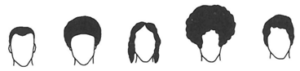
Among the five hairstyles was one commonly found in the 1950s. It was called the “crew cut”, which was closely clipped hair with a flat top. The style selected to represent the early 1960s was common among rock and roll groups. It featured hair cut evenly across the forehead with just enough to cover half of each ear. Hair that was not cut at all was fashionable in the late 1960s. In this period, hair down to the shoulders was not uncommon. The early 1970s were represented by curled hair which was brushed up into a high, soft and woolly bush. The hairstyle associated with the late 1970s was shorter than that in the early 1970s. The hair was brushed down to cover the ears and the sides of the face. This was the “disco” style.
The charts below indicate the percentages of each hairstyle chosen by people in the three age groups.
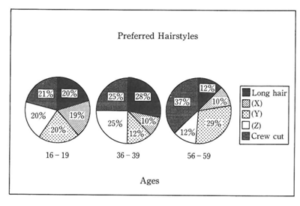
Two major findings came out of the survey. The first one was that particular hairstyles were preferred to varying degrees. The crew cut was popular in all three groups. The least favored hairstyle, in contrast, was the “bushy” style. The disco style was chosen as the second most favored hairstyle by the oldest group, although this style was not so popular among people in their late thirties. Long hair turned out to be unpopular among people in their late fifties.
The second finding of the survey was that older people preferred a more limited range of styles. Each of the five hairstyles was selected by more or less equal percentages of those in their late teens, probably reflecting the varied lifestyles of young people. In the case of people in their late thirties, however, there was a strong preference for three styles. This tendency to favor fewer styles is more clearly seen in the oldest group, who for the most part preferred only two hairstyles.