When going to their schools or places of work,
学校や職場へ向かうとき、
people may choose
人々は選ぶことができる
among several different means of transportation,
いくつかの異なる交通手段の中から
such as trains, buses, subways, bicycles, or cars.
電車、バス、地下鉄、自転車、あるいは車といった
学校や職場へ向かうとき、人々は電車、バス、地下鉄、自転車、あるいは車といった、いくつか異なった交通手段の中から選ぶことができる。
means「手段」
transportation「輸送、移動」
When going to their schools or places of work, people may choose among several different means of transportation, such as trains, buses, subways, bicycles, or cars.
The differences
違いは
in the ways {people commute}
人々が通勤する方法における
can be quite large
かなり大きくなりうる
when cities around the world
世界中の都市が
are compared.
比較されるとき
世界各地の都市を比較したとき、人々の通勤の仕方の違いはかなり大きいことがある。
commute「通勤する」
compare「比較する」
The differences in the ways people commute can be quite large when cities around the world are compared.
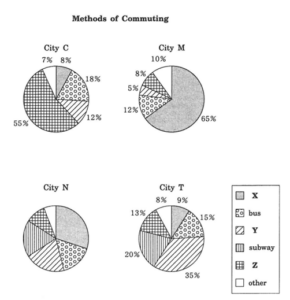
The following charts
以下の図は
show the types of transportation
交通機関の種類を示している
{that are used in four cities}.
4つの都市で使われている
以下の図は、4つの都市で使われている交通機関の種類を示している。
transportation「輸送、移動」
The following charts show the types of transportation that are used in four cities.
Cars are the favored means in City M,
M市では、車が好まれる手段であり、
where the city government has chosen
そこでは同市の行政が選んできた
to spend money on roads and buildings
道路や建物にお金を使うことを
rather than on public transportation systems.
公共交通機関よりもむしろ
M市では、車が好まれる手段となっており、同市の行政は公共交通機関よりも道路や建物にお金を使うことを選んできた。
favor「好む」
rather than「~よりむしろ」
Cars are the favored means in City M, where the city government has chosen to spend money on roads and buildings rather than on public transportation systems.
In addition,
加えて、
the average salary has increased enough
平均給与が十分に上昇したので
for more people to own cars.
より多くの人が車を所有できるようになった
加えて、平均給与が十分に上昇したため、より多くの人が車を所有できるようになった。
in addition「加えて」
own「所有する」
In addition, the average salary has increased enough for more people to own cars.
In City C,
C市では、
on the other hand,
一方で
more than half the commuters
通勤者の半数以上が
depend on bicycles,
自転車に頼っている
because there is not enough space
十分なスペースがないため
to park cars
車を停めるための
and the level of income for workers
そして労働者の収入水準が
is low.
低いため
一方でC市では、通勤者の半数以上が自転車に頼っている。というのも、車を停める場所が十分になく、労働者の収入レベルも低いからである。
commuters「通勤者」
depend on「~に依存する」
income「収入」
In City C, on the other hand, more than half the commuters depend on bicycles, because there is not enough space to park cars and the level of income for workers is low.
Furthermore,
さらに、
bicycles,
自転車は
which are smaller and cheaper,
より小さくて安価であるが
have been the traditional means of travel there
その地域における伝統的な移動手段となってきた
since the 1920s.
1920年代から
さらに、小さくて安価な自転車は、1920年代からその地域で伝統的な移動手段となっている。
furthermore「さらに」
means「手段」
Furthermore, bicycles, which are smaller and cheaper, have been the traditional means of travel there since the 1920s.
In City T,
T市は、
which is known for its modern and efficient rail services,
近代的で効率の良い鉄道サービスで知られているが
more than one-third of the people use trains,
3分の1を超える人々が電車を利用し
while one-fifth use the subway.
一方で5分の1が地下鉄を利用する
T市は近代的で効率の良い鉄道で知られており、3分の1を超える人が電車を利用し、5分の1が地下鉄を利用している。
efficient「効率的な」
one-third「3分の1」
In City T, which is known for its modern and efficient rail services, more than one-third of the people use trains, while one-fifth use the subway.
Like City T,
T市と同様に、
City N shows a fairly good balance
N市はかなり良いバランスを示している
in the numbers of commuters
通勤者の数における
{using the different types of transportation}.
さまざまな種類の交通手段を利用する
T市と同様に、N市もさまざまな交通手段を使う通勤者の数がかなりバランスよく分かれている。
fairly「かなり」
in 「~における、~において」
⇒balance in 「~におけるバランス⇒~のバランス」
commuters「通勤者」
transportation「輸送、移動」
Like City T, City N shows a fairly good balance in the numbers of commuters using the different types of transportation.
However,
しかし、
unlike City T,
T市とは異なり、
City N was designed for automobiles,
N市は自動車のために設計された
so the proportion of drivers is over three times
だから、運転者の割合は3倍を超えている
that of City T.
T市のそれの
しかし、T市と異なり、N市は自動車に合わせて設計されたため、運転者の割合はT市の3倍を超えている。
proportion「割合」
However, unlike City T, City N was designed for automobiles, so the proportion of drivers is over three times that of City T.
Several problems have occurred
いくつかの問題が起きている
in places
場所において
{where the number of people
そこでは人々の数が
{who drive in the city}
都市部で車を運転する
has increased in recent years}.
近年増加している
近年、都市部で車に乗る人が増加している場所では、いくつかの問題が起きている。
occur「起きる」
Several problems have occurred in places where the number of people who drive in the city has increased in recent years.
One problem
ひとつの問題は
is heavy traffic jams,
深刻な交通渋滞であり
especially during rush hours.
特にラッシュアワーには
ひとつの問題は深刻な交通渋滞であり、特にラッシュアワーにはひどくなる。
traffic jam「渋滞」
One problem is heavy traffic jams, especially during rush hours.
For example,
たとえば、
in City M,
M市では、
it takes more than one hour
1時間以上かかる
to go only four kilometers by car,
車でわずか4キロ行くのに
while by train it would take less than 10 minutes.
電車なら10分もかからないのに対して
たとえばM市では、車でわずか4キロ行くのに1時間以上かかるのに対し、電車なら10分もかからない。
For example, in City M, it takes more than one hour to go only four kilometers by car, while by train it would take less than 10 minutes.
Another problem
もうひとつの問題は
is the air pollution
大気汚染である
{caused by automobiles}.
自動車によって引き起こされる
もうひとつの問題は、自動車による大気汚染である。
pollution「汚染」
Another problem is the air pollution caused by automobiles.
City M is trying to solve the problem
M市は問題を解決しようとしている
of the traffic jams
交通渋滞の
by introducing a “Park-and-Ride” system
「パーク・アンド・ライド」システムを導入することによって
in areas
地域において
close to the city.
都市に近い
M市は、都市近郊に「パーク・アンド・ライド」システムを導入することで、交通渋滞の問題を解決しようとしている。
introduce「導入する」
solution「解決策」
City M is trying to solve the problem of the traffic jams by introducing a “Park-and-Ride” system in areas close to the city.
Drivers will be able to park
ドライバーは駐車できるようになる
at a train or bus station
電車やバスの駅に
near their homes
自宅の近くの
and then continue their journey into the city
そしてその後、都市部への移動を続ける
using public transportation.
公共交通機関を使って
ドライバーは自宅近くの電車やバスの駅に駐車し、その後、公共交通機関を使って都市部に向かうことができるようになる。
Drivers will be able to park at a train or bus station near their homes and then continue their journey into the city using public transportation.
Additional parking spaces
追加の駐車スペースが
are to be created
設けられることになっている
around these stations.
こうした駅の周囲に
こうした駅の周囲には、追加の駐車スペースが設けられることになっている。
additional「追加の」
Additional parking spaces are to be created around these stations.
Such solutions as City M’s
M市のような解決策は
lead to far fewer traffic jams,
交通渋滞をはるかに少なくし
greater commuters’ satisfaction,
通勤者の満足度を高め
and a cleaner environment.
そしてより清潔な環境をもたらす
M市のような解決策を取ることで、交通渋滞は大幅に減り、通勤者の満足度も上がり、環境もよりきれいになる。
solution「解決策」
satisfaction「満足」
Such solutions as City M’s lead to far fewer traffic jams, greater commuters’ satisfaction, and a cleaner environment.
Q1
The probable percentage of commuters
通勤者のおそらくの割合は
{who use cars in City N}
N市で車を使う
is …
…である
N市で車を利用している通勤者の割合はおそらく…である。
commuters「通勤者」
The probable percentage of commuters who use cars in City N is …
Q2
In which of the following methods of commuting
次の通勤方法のうちどれにおいて
do the cities differ the least?
都市間の差がもっとも少ないか
次の通勤手段のうち、都市間での差がもっとも少ないものはどれか。
method「方法」
commute「通勤する」
differ「異なる」
In which of the following methods of commuting do the cities differ the least?
Q3
What is NOT mentioned in this passage
この文章で述べられていないのは何か
as an influence
影響として
on the choice of transportation
交通手段の選択に対する
by commuters?
通勤者による
通勤者による交通手段の選択に影響を与えるものとして、この文章で述べられていないのはどれか。
mention「言う」
influence「影響」
transportation「輸送、移動」
commuters「通勤者」
What is NOT mentioned in this passage as an influence on the choice of transportation by commuters?
Q4
The passage shows that …
この文章は次のことを示している。
この文章は次のことを示している。
The passage shows that …
① bicycles last for an average of about 80 years
自転車は平均して約80年もつ
in City C
C市では
C市では、自転車は平均して約80年もつ
last「続く、もつ」
① bicycles last for an average of about 80 years in City C
② City M wants to limit commuter automobile use
M市は通勤者の自動車使用を制限したいと思っている
within the city
市内での
M市は、市内での通勤者の自動車使用を制限したいと思っている
② City M wants to limit commuter automobile use within the city
③ “Park-and-Ride” is a way
「パーク・アンド・ライド」とは方法である
to help drivers
ドライバーを助けるための
to use extra parking space
余分な駐車スペースを利用する
in the city
市内の
「パーク・アンド・ライド」とは、ドライバーが市内の余分な駐車スペースを利用できるようにする方法である
extra「余分の」
③ “Park-and-Ride” is a way to help drivers to use extra parking space in the city
④ bicycles in City T
T市の自転車は
are slightly more expensive
わずかに高い
than they are in City C
C市におけるよりも
T市では、C市よりも自転車はわずかに高い
slightly「わずかに」
④ bicycles in City T are slightly more expensive than they are in City C
When going to their schools or places of work, people may choose among several different means of transportation, such as trains, buses, subways, bicycles, or cars. The differences in the ways people commute can be quite large when cities around the world are compared.
The following charts show the types of transportation that are used in four cities. Cars are the favored means in City M, where the city government has chosen to spend money on roads and buildings rather than on public transportation systems. In addition, the average salary has increased enough for more people to own cars. In City C, on the other hand, more than half the commuters depend on bicycles, because there is not enough space to park cars and the level of income for workers is low. Furthermore, bicycles, which are smaller and cheaper, have been the traditional means of travel there since the 1920s. In City T, which is known for its modern and efficient rail services, more than one-third of the people use trains, while one-fifth use the subway. Like City T, City N shows a fairly good balance in the numbers of commuters using the different types of transportation. However, unlike City T, City N was designed for automobiles, so the proportion of drivers is over three times that of City T.
Several problems have occurred in places where the number of people who drive in the city has increased in recent years. One problem is heavy traffic jams, especially during rush hours. For example, in City M, it takes more than one hour to go only four kilometers by car, while by train it would take less than 10 minutes. Another problem is the air pollution caused by automobiles.
City M is trying to solve the problem of the traffic jams by introducing a “Park-and-Ride” system in areas close to the city. Drivers will be able to park at a train or bus station near their homes and then continue their journey into the city using public transportation. Additional parking spaces are to be created around these stations. Such solutions as City M’s lead to far fewer traffic jams, greater commuter ‘satisfaction, and a cleaner environment.
問1 The probable percentage of commuters who use cars in City N is …
① 15
② 20
③ 25
④ 30
問2 In which of the following methods of commuting do the cities differ the least?
① subways
② bicycles
③ automobiles
④ buses
問3 What is NOT mentioned in this passage as an influence on the choice of transportation by commuters?
① earnings
② education
③ tradition
④ roads
問4 The passage shows that …
① bicycles last for an average of about 80 years in City C
② City M wants to limit commuter automobile use within the city
③ “Park-and-Ride” is a way to help drivers to use extra parking space in the city
④bicycles in City T are slightly more expensive than they are in City C