As the world’s human population increases,
世界の人口が増えるにつれて、
the number of fish has been decreasing
魚の数は減ってきている
because of over-fishing.
乱獲のために。
世界の人口が増えるにつれて、魚の数は乱獲のために減ってきている。
as ~につれて
increase 増える
decrease 減る
As the world’s human population increases, the number of fish has been decreasing because of over-fishing.
The result has been a rise
結果は上昇であった
in the price of fish
魚の値段の
as well as the possibility
可能性と同様に
that important fish species
重要な魚の種が
will disappear completely
完全に消えてしまうという
結果として、魚の値段が上がり、重要な魚の種が完全に消えてしまう可能性もある。
rise 上昇
in ~における
⇒rise in ~における上昇⇒~の上昇
as well as ~と同様
possibility 可能性
species 種
disappear 消える
completely 完全に
The result has been a rise in the price of fish as well as the possibility that important fish species will disappear completely.
In order to find the best way
最善の方法を見つけるために
of maintaining a stable supply of fish,
魚の安定した供給を維持するための
a group of fishery researchers conducted a project
ある水産研究者のグループがあるプロジェクトを行った
{which compared three different ways
3つの異なる方法を比較する
of raising four species of fish}.
4種類の魚を育てる
魚の安定した供給を維持する最善の方法を見つけるために、ある水産研究者のグループが、4種類の魚を育てる3つの異なる方法を比較する実験を行った。
maintain 維持する
stable 安定した
supply 供給
fishery 漁業
conduct 指揮する
compare 比較する
raise 育てる
In order to find the best way of maintaining a stable supply of fish, a group of fishery researchers conducted a project which compared three different ways of raising four species of fish.
One method was
1つの方法は
to catch fish and
魚を捕まえて
raise them in large ponds.
大きな池で育てることだった
1つの方法は魚を捕まえて大きな池で育てることだった。
fish 魚を捕る
One method was to catch fish and raise them in large ponds.
The second method
2つ目の方法は
was to preserve the natural environment.
自然環境を保護することだった
2つ目の方法は自然環境を保護することだった。
preserve 保護する
The second method was to preserve the natural environment.
This was done
これは行われた
by making agreements
合意をすることによって
not to fish for two years
2年間魚を捕らないという
so that the fish population could increase naturally.
魚の数が自然に増えるように
これは、魚の数が自然に増えるように、2年間魚を捕らないという合意をすることで行われた。
agreement 合意
fish 魚をとる[動]
so that ~ように
This was done by making agreements not to fish for two years so that the fish population could increase naturally.
The third method
3つ目の方法は
was to catch fish
魚を捕まえて
and then transport them to new locations
それから新しい場所に運ぶことだった
{where the researchers thought
研究者たちが考えた場所で
the fish could increase their numbers}.
魚が数を増やせると
3つ目の方法は魚を捕まえて、研究者たちが魚の数を増やせると考えた新しい場所に運ぶことだった。
transport 運ぶ
The third method was to catch fish and then transport them to new locations where the researchers thought the fish could increase their numbers.
The first step
最初のステップは
was to estimate the populations
個体数を推測することだった
of the four types of fish
4種類の魚の
{living in their natural environment}.
自然環境に生きる
最初のステップは、自然環境に生きる4種類の魚の個体数を推測することだった。
population 個体数
The first step was to estimate the populations of the four types of fish living in their natural environment.
After two years,
2年後
the fish populations
魚の個体数は
under the three different conditions
3つの異なる条件下での
were estimated again.
再び推測された
2年後、3つの異なる条件下での魚の個体数が再び推測された。
estimate 推測する
After two years, the fish populations under the three different conditions were estimated again.
The percentages of population increase
個体数増加の割合は
are shown in the figure below.
下の図に示されている
個体数増加の割合は下の図に示されている。
increase増加
figure 数値、表
The percentages of population increase are shown in the figure below.
Then comparisons were made.
その後、比較が行われた。
comparison 比較
Then comparisons were made.
The researchers found
研究者たちは発見した
that all three methods were successful
3つの方法すべてが成功したということが
to different degrees.
程度は異なるが
研究者たちは、3つの方法すべてが程度の違いはあるが成功したことを発見した。
degree 程度
The researchers found that all three methods were successful to different degrees.
They found
彼らはわかった
that the “pond” method worked reasonably well
「池」方法がかなりうまく機能したということを
in producing increases
増加をもたらすのに
in some of the fish populations.
一部の魚の個体数において
彼らは、「池」の方法が一部の魚の個体数を増やすのにかなりうまく機能するとわかった。
specifically 特に
in doing ~することにおいて
They found that the “pond” method worked reasonably well in producing increases in some of the fish populations.
Specifically,
具体的には、
they found
彼らはわかった
that fish Types A and C
AタイプとCタイプの魚が
could easily live in the ponds.
池で簡単に生きられることを見つけた。
具体的には、彼らはAタイプとCタイプの魚が池で簡単に生きられることを見つけた。
specifically 特に、具体的には
Specifically, they found that fish Types A and C could easily live in the ponds.
The main weakness of this method,
この方法の主な弱点は
however,
しかし
was its cost.
その費用だった
しかし、この方法の主な弱点はその費用だった。
weakness 弱さ
The main weakness of this method, however, was its cost.
For instance,
例えば
the cost of raising Type A fish
Aタイプの魚を育てる費用は
was nearly the same as the selling price.
売値とほとんど同じだった
例えば、Aタイプの魚を育てる費用は売値とほとんど同じだった。
for instance 例えば
profit 利益
For instance, the cost of raising Type A fish was nearly the same as the selling price.
No profit could be made
利益を得ることはできなかった
if the Type A population increase was below 8%.
もしAタイプの個体数増加が8%を下回れば
もしAタイプの個体数増加が8%を下回れば、利益は出なかった。
profit利益
below ~の下に
No profit could be made if the Type A population increase was below 8%.
They concluded
彼らは結論づけた
that Type C fish,
Cタイプの魚が
which had a high market price,
市場価格が高い
was the only species
唯一の種だと
{that could be raised profitably}.
利益を出して育てられる
彼らは、市場価格が高いCタイプの魚だけが利益を出して育てられる唯一の種だと結論づけた。
conclude 結論づける
marketable 市場価値のある
They concluded that Type C fish, which had a high market price, was the only species that could be raised profitably.
The second method, the “protected environment” method,
2つ目の方法、「保護環境」方法もまた
was also successful.
成功した。
2つ目の方法、「保護環境」方法もまた成功した。
effective 効果的な
The second method, the “protected environment” method, was also successful.
However,
しかし
for some of the species,
一部の種については
numbers did not increase
数は増えなかった
as much as the researchers had hoped
研究者たちが望んだほどには
during the “no fishing” agreement period.
「禁漁」合意期間中に
しかし、一部の種については、「禁漁」合意期間中に、研究者たちが望んだほどには数が増えなかった。
agreement 合意
However, for some of the species, numbers did not increase as much as the researchers had hoped during the “no fishing” agreement period.
Only Type D fish increased more than 3%
Dタイプの魚だけが3%以上増加した
after two years.
2年後に
Dタイプの魚だけが2年後に3%以上増加した。
Only Type D fish increased more than 3% after two years.
The third method,
3つ目の方法
the “relocation” method,
「移転」方法は
worked well for fish Types B and C,
BタイプとCタイプの魚にはうまく機能したが
but not for Type D fish.
Dタイプの魚には機能しなかった
3つ目の方法である「移転」方法は、BタイプとCタイプの魚にはうまく機能したが、Dタイプの魚には機能しなかった。
relocation 移転
The third method, the “relocation” method, worked well for fish Types B and C, but not for Type D fish.
It was found
わかった
that other fish
他の魚が
{already living in the new locations}
すでに新しい場所に生息していた
often ate the Type D fish.
しばしばDタイプの魚を食べていた
すでに新しい場所に生息していた他の魚が、しばしばDタイプの魚を食べていたことがわかった。
It was found that other fish already living in the new locations often ate the Type D fish.
For Type A fish
Aタイプの魚については
the “relocation” method was only slightly more effective
「移転」方法はわずかにより効果的だっただけだった
in increasing the population
個体数を増やす点で
than the “protected environment” method.
「保護環境」方法よりも
Aタイプの魚については、「移転」方法は「保護環境」方法よりわずかに効果的だった。
slightly わずかに
in doing ~することにおいて⇒~する点で
For Type A fish the “relocation” method was only slightly more effective in increasing the population than the “protected environment” method.
The fishery researchers concluded
水産研究者たちは結論づけた
that any one method of raising fish
魚を育てるどの1つの方法も
would not work profitably
利益を出してうまくいかないだろうと
for all four types.
4種類すべてに対して
水産研究者たちは、単独ではどの魚を育てる方法も、4種類すべてに対して利益を出してうまくいくことはないだろうと結論づけた。
fishery 漁業
any one … どの1つの..も
⇒単独ではどの…も
The fishery researchers concluded that any one method of raising fish would not work profitably for all four types.
Each type of fish would require different method
それぞれの種類の魚は異なる方法を必要とするだろう
for its population to increase.
その個体数が増加するためには
それぞれの種類の魚は、その個体数が増加するために異なる方法を必要とするだろう。
for S to do Sが~するための
整理14-1 意味上の主語
Each type of fish would require different method for its population to increase.
They realized
彼らは気づいた
that if they used a variety of methods,
もし様々な方法を使えば
the supply of these four kinds of fish
これら4種類の魚の供給は
would be safe
安全であるだろうと
well into the future.
将来にわたって
彼らは、様々な方法を使えば、これら4種類の魚の供給は将来にわたって安全であろうと気づいた。
a variety of 様々な
supply供給
They realized that if they used a variety of methods, the supply of these four kinds of fish would be safe well into the future.
Q1 The long-term goal of the fisheries project was …
水産実験の長期的な目的は…
①to find the best way to relocate endangered fish
絶滅の危機にある魚を移す最善の方法を見つけること
②to develop new species of marketable fish
市場に出せる新しい種類の魚を開発すること
③to increase the number of better fish species
より良い種類の魚の数を増やすこと
④to provide a constant food resource
provide 供給する
一定の食糧源を供給すること
Q2 The researchers discovered that with the “pond” method …
研究者たちは「池」の方法について…ということを発見した。
①no profit could be made raising Type A fish
『池』方式でタイプAの魚を養殖しても利益が出ない
②Type B fish cost the least to raise
Bタイプの魚は育てるのに最も費用が少ない
③the cost of raising Type C fish was too high
Cタイプの魚を育てる費用は高すぎる
④in general, an 8% population increase is needed for profit
一般的に、利益を出すには8%の増加率が必要である
Q3 The fishery researchers eventually concluded that …
水産研究家たちは最終的に…という結論を出した。
①the “protected environment” method produced the most fish
「環境保護」法は最も多くの魚を育てた
②the cost of the “relocation” method was too high
「移転」法の費用は高すぎた
③no single method was effective for all four types of fish
どの単独の方法も4種類すべての魚に効果的ではなかった
④the research methods used in the project were all safe
このプロジェクトで使われた研究方法はすべて安全だった
Q4
①Among the four species, the Type B fish population increases most.
4種類の中でBタイプの魚の数が最も増える
②The “pond” method provides three times more Type D fish than the “relocation” method does.
「池」法は「移転」法より3倍多くのDタイプの魚を育てる
③Relocated Type A fish increase more than Type D fish do in ponds.
移転されたAタイプの魚は池のDタイプより増える
④The number of Type C fish increases most in the protected environment.
As the world’s human population increases, the number of fish has been decreasing because of over-fishing. The result has been a rise in the price of fish as well as the possibility that important fish species will disappear completely.
In order to find the best way of maintaining a stable supply of fish, a group of fishery researchers conducted a project which compared three different ways of raising four species of fish.
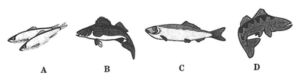
One method was to catch fish and raise them in large ponds. The second method was to preserve the natural environment. This was done by making agreements not to fish for two years so that the fish population could increase naturally. The third method was to catch fish and then transport them to new locations where the researchers thought the fish could increase their numbers.
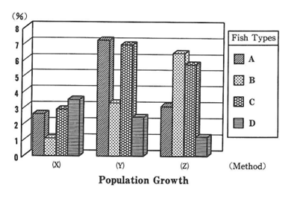
The first step was to estimate the populations of the four types of fish living in their natural environment. After two years, the fish populations under the three different conditions were estimated again. The percentages of population increase are shown in the figure below.
Then comparisons were made. The researchers found that all three methods were successful to different degrees. They found that the “pond” method worked reasonably well in producing increases in some of the fish populations. Specifically, they found that fish Types A and C could easily live in the ponds. The main weakness of this method, however, was its cost. For instance, the cost of raising Type A fish was nearly the same as the selling price. No profit could be made if the Type A population increase was below 8%. They concluded that Type C fish, which had a high market price, was the only species that could be raised profitably.
The second method, the “protected environment” method, was also successful. However, for some of the species, numbers did not increase as much as the researchers had hoped during the “no fishing” agreement period. Only Type D fish increased more than 3% after two years.
The third method, the “relocation” method, worked well for fish Types B and C, but not for Type D fish. It was found that other fish already living in the new locations often ate the Type D fish. For Type A fish the “relocation” method was only slightly more effective in increasing the population than the “protected environment” method.
The fishery researchers concluded that any one method of raising fish would not work profitably for all four types. Each type of fish would require a different method for its population to increase. They realized that if they used a variety of methods, the supply of these four kinds of fish would be safe well into the future.
Q1 The long-term goal of the fisheries project was …
① to find the best way to relocate endangered fish
② to develop new species of marketable fish
③ to increase the number of better fish species
④ to provide a constant food resource
Q2 The researchers discovered that with the “pond” method …
① no profit could be made raising Type A fish
② Type B fish cost the least to raise
③ the cost of raising Type C fish was too high
④ in general, an 8% population increase is needed for profit
Q3 The fishery researchers eventually concluded that …
① the “protected environment” method produced the most fish
② the cost of the “relocation” method was too high
③ no single method was effective for all four types of fish
④ the research methods used in the project were all safe
Q4
① Among the four species, the Type B fish population increases most.
② The “pond” method provides three times more Type D fish than the “relocation” method does.
③ Relocated Type A fish increase more than Type D fish do in ponds.
④ The number of Type C fish increases most in the protected environment.