How hard
どれほど熱心に
do Japanese people work?
日本人は働いているだろうか
日本人はどれほど熱心に働いているだろうか。
How hard do Japanese people work?
Do they have enough free time
彼らには十分な自由時間があるだろうか
to enjoy family life, travel, or hobbies?
家族生活や旅行、趣味を楽しむための
家族生活や旅行、趣味を楽しむ十分な自由時間はあるだろうか。
Do they have enough free time to enjoy family life, travel, or hobbies?
We have compared
私たちは比較した
the working hours and holidays
労働時間と休日を
of workers in the manufacturing industry
製造業で働く労働者の
of five nations
5か国の
for the year 1995.
1995年について
1995年の5か国の製造業労働者の労働時間と休日数を比較した。
compare「比較する」
manufacturing「製造」
industry「産業」
We have compared the working hours and holidays of workers in the manufacturing industry of five nations for the year 1995.
There are national holidays
国民の休日がある
in each of the five countries,
5か国それぞれに
and people often enjoy three-day weekends.
そして人々はしばしば3連休を楽しむ
5か国それぞれに国民の休日があり、多くの場合3連休を楽しむ。
There are national holidays in each of the five countries, and people often enjoy three-day weekends.
Japan leads this group
日本はこのグループをリードしている
in terms of the number of national holidays
国民の休日の数の点で
per year,
年間の
with 15 days
15日で
on its calendar
カレンダー上の
such as Children’s Day and Culture Day.
こどもの日や文化の日など
日本は年間の国民の休日の数においてこのグループをリードしており、こどもの日や文化の日など15日の休日がある。
in terms of「~の点で」
per「~につき」
Japan leads this group in terms of the number of national holidays per year, with 15 days on its calendar such as Children’s Day and Culture Day.
What if we look at the total number
もし私たちが合計数を見たらどうだろうか
of holidays per year?
年間の休日の
もし年間の休日の合計数を見たらどうだろうか。
what if「もし~ならどうだろうか」
include「含む」
What if we look at the total number of holidays per year?
This would include
それは含むだろう
not only national holidays
国民の休日だけでなく
but also weekends and paid vacation.
週末や有給休暇も
それは国民の休日だけでなく、週末や有給休暇も含むだろう。
paid vacation「有給休暇」
This would include not only national holidays but also weekends and paid vacation.
Germany led the five nations
ドイツは5か国をリードした
in the total number of annual holidays
年間休日の合計数において
with 157 days.
157日で
ドイツは157日の年間休日合計数で5か国中トップだった。
annual「年間の」
Germany led the five nations in the total number of annual holidays with 157 days.
France came in second
フランスは2位だった
with 154 days.
154日で
フランスは154日で2位だった。
France came in second with 154 days.
The United Kingdom (UK) was third,
イギリスは3位だった
followed by the United States of America (USA).
そしてアメリカがそれに続いた
イギリスは3位で、アメリカがそれに続いた。
follow「後に続く」
The United Kingdom (UK) was third, followed by the United States of America (USA).
Japan came in last
日本は最下位だった
with the smallest number of holidays.
最も少ない休日数で
日本は最も休日が少なく最下位だった。
Japan came in last with the smallest number of holidays.
Some people say
一部の人々は言う
that the Japanese are taking more time off
日本人は以前より多くの休暇を取っていると
than they used to,
かつてよりも
and that the number of Japanese
そして日本人の数は
{vacationing overseas}
海外で休暇を過ごす
is high>.
多いと
日本人は以前より休暇を多く取るようになり、海外で休暇を過ごす日本人の数が多いと言う人もいる。
used to do「かつて~していた」
Some people say that the Japanese are taking more time off than they used to, and that the number of Japanese vacationing overseas is high.
This may be true,
これは本当かもしれない
but statistics show
しかし統計は示している
that, in 1995 at least,
少なくとも1995年には
Western Europeans and Americans took more holidays
西ヨーロッパ人やアメリカ人の方が多くの休日を取っていたと
than the Japanese did.
日本人よりも
これは本当かもしれないが、少なくとも1995年には、西ヨーロッパ人やアメリカ人の方が日本人より多くの休日を取っていたと統計は示している。
statistics「統計」
This may be true, but statistics show that, in 1995 at least, Western Europeans and Americans took more holidays than the Japanese did.
Most Western Europeans
西ヨーロッパ人の多くは
take about four weeks of paid vacation a year,
年間約4週間の有給休暇を取る
while the Japanese and Americans
一方で日本人とアメリカ人は
usually take much less than that.
通常それよりずっと少なく取る
西ヨーロッパ人の多くは年間約4週間の有給休暇を取るが、日本人とアメリカ人はそれよりずっと少ない。
paid vacation「有給休暇」
Most Western Europeans take about four weeks of paid vacation a year, while the Japanese and Americans usually take much less than that.
A problem
問題は
{that seems to be unique to the Japanese}
日本人に特有と思われる
is that only a small percentage
わずかな割合だけが
of the paid vacation {offered}
与えられている有給休暇のうち
is actually taken.
実際に取られているということである
日本人に特有と思われる問題は、与えられている有給休暇のうち実際に取られるのはわずかな割合だけだということである。
unique to「~に特有の」
A problem that seems to be unique to the Japanese is that only a small percentage of the paid vacation offered is actually taken.
There are a lot of Japanese
多くの日本人がいる
{who do not feel comfortable
気まずさを感じる
about taking time off
休みを取ることに
while their fellow workers
仲間の労働者が
have to continue working}.
働き続けなければならない間
多くの日本人は、仲間の労働者が働き続けている間に休みを取ることに気まずさを感じている。
fellow「仲間」
There are a lot of Japanese who do not feel comfortable about taking time off while their fellow workers have to continue working.
Some Japanese business leaders, however,
しかし一部の日本の経営者は
have encouraged workers
労働者に促してきた
to take more paid vacations
もっと有給休暇を取るよう
in an effort
努力の中で
to reduce international criticism
国際的な批判を減らすための
that the Japanese work too hard.
日本人は働きすぎるという
しかし、日本の経営者の中には、日本人が働きすぎるという国際的な批判を減らすために、労働者がもっと有給休暇を取るよう促している人もいる。
encourage O to do「Oが~するよう促す」
reduce「減らす」
criticism「批判」
Some Japanese business leaders, however, have encouraged workers to take more paid vacations in an effort to reduce international criticism that the Japanese work too hard.
Surprisingly,
驚くべきことに
Japan came in second
日本は2位だった
to the USA
アメリカに次いで
in terms of the average number
平均数の点で
of annual working hours
年間労働時間の
at 1,975 hours in 1995.
1995年の1975時間で
驚くべきことに、日本は1995年の年間平均労働時間1975時間でアメリカに次いで2位だった。
in terms of「~の点で」
annual「年間の」
Surprisingly, Japan came in second to the USA in terms of the average number of annual working hours at 1,975 hours in 1995.
The United Kingdom came in third
イギリスは3位だった
at 1,943 hours,
1943時間で
followed by France
そしてフランスが続いた
at 1,680 hours.
1680時間で
イギリスは1943時間で3位、フランスが1680時間でそれに続いた。
follow「後に続く」
The United Kingdom came in third at 1,943 hours, followed by France at 1,680 hours.
Germans worked the fewest hours
ドイツ人は最も少ない時間働いた
that year.
その年
ドイツ人はその年最も少ない時間働いた。
Germans worked the fewest hours that year.
It is interesting
興味深いことである
that research such as this
このような調査が
shows that facts do not always match the impression
事実が印象と必ずしも一致しないことを示していることは
{most people have}.
多くの人が持っている
このような調査は、事実が多くの人の印象と必ずしも一致しないことを示しているのは興味深い。
It is interesting that research such as this shows that facts do not always match the impression most people have.
Q1 Japan leads the five nations
日本は5か国をリードしている
in the number of [ 34 ].
[ 34 ]の数において
日本は5か国中、[ 34 ]の数でトップである。
①paid holidays
②annual holidays
③national holidays
④working hours
Q2 Japan is different from the other nations
日本は他の国々と異なっている
in that [ 35 ].
[ 35 ]という点で
日本は他の国々と[ 35 ]という点で異なっている。
①the Japanese
日本人は
have only about half as many days off
休日を半分ほどしか持っていない
as Western Europeans
西ヨーロッパ人と比べて
日本人の休日は西ヨーロッパ人の半分ほどしかない
②many Japanese workers
多くの日本人労働者は
hesitate to take paid vacations
有給休暇を取るのをためらう
多くの日本人労働者は有給休暇を取るのをためらう
③most Japanese go abroad
多くの日本人は海外へ行く
to enjoy their holidays
休暇を楽しむために
far away from work
仕事から遠く離れて
多くの日本人は仕事から遠く離れて海外で休暇を楽しむ
④most of the holidays
休日の大半は
{offered to workers each year}
毎年労働者に与えられる
are national holidays
国民の休日である
労働者に毎年与えられる休日の大半は国民の休日である
Q3 Among the five countries,
5か国の中で
[ 36 ] are similar
[ 36 ]は似ている
in that their workers receive
労働者が受け取るという点で
more vacation time
より多くの休暇時間を
and spend fewer hours at work
そして仕事に費やす時間が少ない
than the others.
他国よりも
5か国の中で、[ 36 ] は労働者が多くの休暇を取り、労働時間が短いという点で似ている。
in that「~という点で」
①the UK and France
②Germany and Japan
③Japan and the USA
④France and Germany
Q4 According to the passage and the figure,
文章と図によると
it can be said that in 1995 …
1995年にはこう言える
文章と図によると、1995年にはこう言える。
①French workers spent
フランス人労働者は費やした
twice as many hours on the job
仕事に2倍の時間を
as Germans
ドイツ人と比べて
フランス人労働者はドイツ人の2倍の時間働いた。
②the more hours people spent working,
人々がより多く働くほど
the fewer holidays they took
取る休暇は少なかった
人々はより多く働くほど、取る休暇は少なかった。
③Japanese workers cared
日本人労働者は気にしていた
about <what people in other countries
他国の人々が
thought about them>
自分たちについてどう思うか
日本人労働者は他国の人々が自分たちをどう思うかを気にしていた。
④the Japanese took the fewest holidays
日本人は最も少ない休暇を取った
and yet did not work the most hours
それでも最も長く働いたわけではなかった
日本人は最も少ない休暇を取りながらも、最も長く働いたわけではなかった。
How hard do Japanese people work? Do they have enough free time to enjoy family life, travel, or hobbies? We have compared the working hours and holidays of workers in the manufacturing industry of five nations for the year 1995.
There are national holidays in each of the five countries, and people often enjoy three-day weekends. Japan leads this group in terms of the number of national holidays per year, with 15 days on its calendar such as Children’s Day and Culture Day.
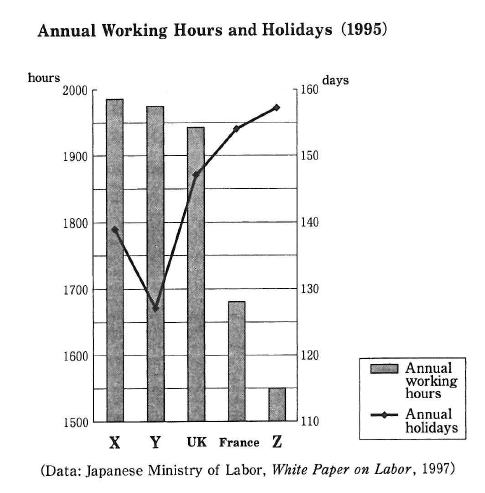
What if we look at the total number of holidays per year? This would include not only national holidays but also weekends and paid vacation. Germany led the five nations in the total number of annual holidays with 157 days. France came in second with 154 days. The United Kingdom (UK) was third, followed by the United States of America (USA). Japan came in last with the smallest number of holidays.
Some people say that the Japanese are taking more time off than they used to, and that the number of Japanese vacationing overseas is high. This may be true, but statistics show that, in 1995 at least, Western Europeans and Americans took more holidays than the Japanese did.
Most Western Europeans take about four weeks of paid vacation a year, while the Japanese and Americans usually take much less than that. A problem that seems to be unique to the Japanese is that only a small percentage of the paid vacation offered is actually taken. There are a lot of Japanese who do not feel comfortable about taking time off while their fellow workers have to continue working. Some Japanese business leaders, however, have encouraged workers to take more paid vacations in an effort to reduce international criticism that the Japanese work too hard.
Surprisingly, Japan came in second to the USA in terms of the average number of annual working hours at 1,975 hours in 1995. The United Kingdom came in third at 1,943 hours, followed by France at 1,680 hours. Germans worked the fewest hours that year. It is interesting that research such as this shows that facts do not always match the impression most people have.
問1 Japan leads the five nations in the number of [ 34 ]
① paid holidays
② annual holidays
③ national holidays
④ working hours
問2 Japan is different from the other nations in that [ 35 ]
① the Japanese have only about half as many days off as Western Europeans
② many Japanese workers hesitate to take paid vacations
③ most Japanese go abroad to enjoy their holidays far away from work
④ most of the holidays offered to workers each year are national holidays
問3 Among the five countries, [ 36 ] are similar in that their workers receive more vacation time and spend fewer hours at work than the others.
① the UK and France
② Germany and Japan
③ Japan and the USA
④ France and Germany
問4 According to the passage and the figure, it can be said that in 1995 [ 37 ].
① French workers spent twice as many hours on the job as Germans
② the more hours people spent working, the fewer holidays they took
③ Japanese workers cared about what people in other countries thought about them
④ the Japanese took the fewest holidays and yet did not work the most hours