Coal has long been
石炭は長らく
an important natural resource.
重要な天然資源であった。
石炭は長らく重要な天然資源であった。
coal「石炭」
natural resource「天然資源」
Coal has long been an important natural resource.
Even today,
今でも、
it is widely used
それは広く使われている
as a source of heat
熱源として
for both industrial and domestic purposes.
工業用にも家庭用にも。
今でも工業用にも家庭用にも重要な熱源として広く使われている。
industrial「工業の」
domestic「家庭の」
purpose「目的」
Even today, it is widely used as a source of heat for both industrial and domestic purposes.
Its use
その使用は
in the production of metal goods
金属製品の製造における
goes back
さかのぼる
as far as 3,000 years.
3千年も昔まで。
金属製品の製造での使用は、はるか3千年の昔にさかのぼる。
production「生産」
goods「商品」
Its use in the production of metal goods goes back as far as 3,000 years.
However,
しかし、
it was not until the late 18th century
18世紀後半になって初めて
that its value was fully appreciated.
その価値が十分に認識された。
しかし、その価値が十分に認識されるのはやっと18世紀後半になってからだった。
value「価値」
appreciate「評価する」
it was not until A that …
「Aまでは…じゃなかった
⇒Aになって初めて…」
However, it was not until the late 18th century that its value was fully appreciated.
At that time,
その頃、
coal replaced wood
石炭が木に取って代わった
as an energy source
エネルギー源として
for steam power.
蒸気動力のための。
その頃に蒸気動力のエネルギー源として、石炭が木に取って代わったのである。
replace「~に代わる」
steam「蒸気」
At that time, coal replaced wood as an energy source for steam power.
In the 1880s,
1880年代には、
the use of steam
蒸気の使用が
for generating electricity
発電のための
created a new market for coal.
石炭に新たな市場を生み出した。
1880年代には発電のために蒸気を使い出したことで、石炭には新たな市場が生まれた。
electricity「電気」
In the 1880s, the use of steam for generating electricity created a new market for coal.
However,
しかし、
by around 1920,
1920年頃までに、
oil and electricity
石油と電気が
generated by water power
水力発電による
began to replace coal.
石炭に取って代わり始めた。
しかし、1920年頃には石油と、水力発電による電気が石炭に取って代わり始めた。
replace「~に代わる」
However, by around 1920, oil and electricity generated by water power began to replace coal.
As a result,
その結果、
coal appeared to be gradually losing its importance
石炭は重要性を徐々に失っているように見えた
as a primary energy source.
主要なエネルギー源としての。
そのため、石炭は主要なエネルギー源としての重要性を徐々に失うように思われた。
gradually「段階的に」
primary「主要な」
As a result, coal appeared to be gradually losing its importance as a primary energy source.
Figures
数値は
published by the OECD
OECDによって発表された
show patterns of coal consumption
石炭消費のパターンを示している
between 1985 and 1993.
1985年から1993年の間の。
経済協力開発機構(OECD)が発表した1985年から1993年の石炭消費のパターンを表す数値は、
figure「数値」
consumption「消費」
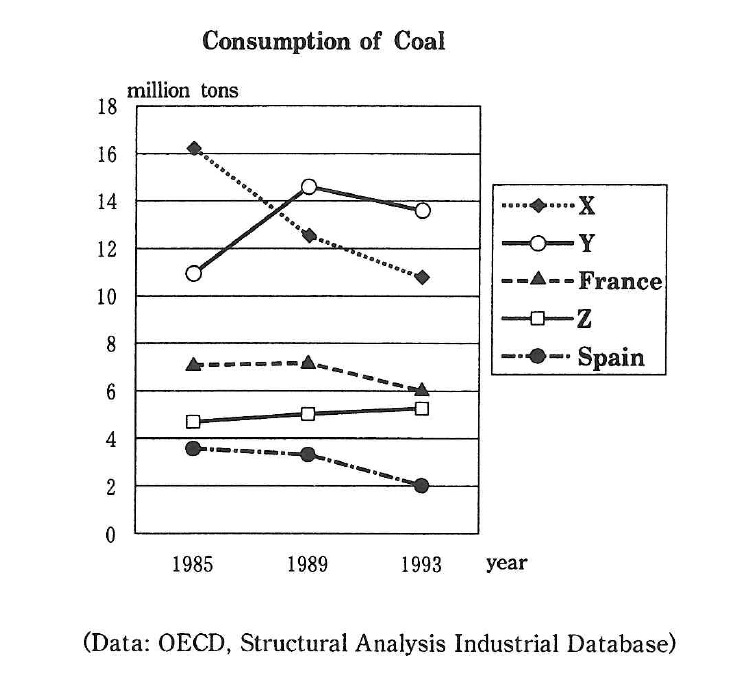
Figures published by the OECD show patterns of coal consumption between 1985 and 1993.
Among the 24 nations studied,
調査対象となった24か国の中で、
coal consumption fell
石炭消費は減少した
from just over 137 million tons
1億3,700万トン強から
to about 94 million tons.
約9,400万トンへと。
調査が行われた24か国中で、石炭の消費は全体で1億3,700万トン強から約9,400万トンに減少した。
nation「国」
decrease「減らす」
Among the 24 nations studied, coal consumption fell from just over 137 million tons to about 94 million tons.
This was an overall decrease
これは全体的な減少であった
of about 32 percent.
約32%の。
およそ32%減少したことを示している。
overall「全体の」
This was an overall decrease of about 32 percent.
However,
しかし、
when we look at individual countries,
個々の国を見ると、
we find
私たちは気づく
that the trend toward reduced coal use
石炭使用量減少への傾向が
is not universal.
普遍的ではないことに。
しかし、個々の国を見ると、石炭の使用量が減少に向かう傾向は普遍的なものではないことがわかる。
individual「個々の」
universal「世界共通の」
However, when we look at individual countries, we find that the trend toward reduced coal use is not universal.
A comparison of three European countries
ヨーロッパの3か国の比較は
— the UK, France, and Spain —
すなわち英国、フランス、スペインの
with two Pacific countries
太平洋地域の2か国との
— Japan and Australia —
すなわち日本とオーストラリアとの
shows some interesting differences.
いくつかの興味深い違いを示している。
ヨーロッパの3か国(英国、フランス、スペイン)と太平洋地域の2か国(日本、オーストラリア)とを比べると、興味深い違いがいくつかある。
compare「比較する」
A comparison of three European countries — the UK, France, and Spain — with two Pacific countries — Japan and Australia — shows some interesting differences.
The trends in European nations
ヨーロッパ諸国の傾向は
are indeed
確かに
in line with the overall pattern,
全体的なパターンに沿っている、
with the UK and Spain being obvious examples.
英国とスペインが明白な例として。
ヨーロッパ諸国の傾向は確かに全体的なパターンに沿っており、明白な例として英国とスペインがある。
indeed「実際に」
obvious「明らかな」
nation「国」
The trends in European nations are indeed in line with the overall pattern, with the UK and Spain being obvious examples.
Their coal consumption decreased
それらの石炭消費は減少した
by 36 percent and 44 percent respectively
それぞれ36%と44%
over the eight-year period.
8年間にわたって。
それぞれ8年間で36%、44%の減少である。
consumption「消費」
decrease「減らす」
respectively「それぞれ」
Their coal consumption decreased by 36 percent and 44 percent respectively over the eight-year period.
During the same period,
同じ期間に、
France’s consumption dropped
フランスの消費量は減少した
from 7.1 million tons
710万トンから
to 6 million tons.
600万トンへと。
同時期にフランスでは石炭の消費量は710万トンから600万トンに減少していた。
consumption「消費」
During the same period, France’s consumption dropped from 7.1 million tons to 6 million tons.
In contrast,
対照的に、
coal consumption increased overall
石炭消費は全体として増加した
in the two Pacific nations
太平洋地域の2か国では
during the same period.
同じ期間に。
一方、太平洋地域の2か国では同時期に全体として石炭の消費量は増加している。
consumption「消費」
overall「全体の」
In contrast, coal consumption increased overall in the two Pacific nations during the same period.
Japan, along with the UK,
日本は英国とともに、
is a major coal consumer,
主要な石炭消費国であり、
and its consumption rose
その消費量は増加した
from 10.9 million tons to 13.8 million tons.
1,090万トンから1,380万トンへと。
日本は英国とともに主な石炭使用国だが、1,090万トンから1,380万トンに消費量が増加している。
consume「消費する」
Japan, along with the UK, is a major coal consumer, and its consumption rose from 10.9 million tons to 13.8 million tons.
Australia’s coal consumption also increased,
オーストラリアの石炭消費も増加した、
from 4.7 million tons to 5.3 million tons.
470万トンから530万トンへと。
一方のオーストラリアではその石炭消費量は470万トンから530万トンに増えていた。
consumption「消費」
Australia’s coal consumption also increased, from 4.7 million tons to 5.3 million tons.
What can explain
何が説明できるだろうか
the case of Japan?
日本の場合を。
日本の場合には、どんな説明が可能だろうか。
What can explain the case of Japan?
Since the oil crisis in 1973,
1973年の石油危機以来、
the Japanese have been looking
日本人は探し続けている
for alternative sources of energy.
代替エネルギー源を。
1973年の第一次石油ショック以来、日本人は他のエネルギー源を探してきた。
crisis「危機」
look for「~を探す」
Since the oil crisis in 1973, the Japanese have been looking for alternative sources of energy.
These include
これらには含まれる
coal, natural gas, and nuclear power.
石炭、天然ガス、原子力エネルギーが。
その中には石炭、天然ガス、原子力エネルギーがある。
include「含む」
These include coal, natural gas, and nuclear power.
Japan’s dependence on oil
日本の石油への依存は
as a primary source of energy
主要なエネルギー源としての
fell from 73 percent in 1975
1975年の73%から減少した
to 56 percent in 1995.
1995年には56%へと。
主要なエネルギー源としての石油に対する日本の依存度は、1975年の73%から、1995年には56%に減少しており、
dependence「依存」
primary「主要な」
Japan’s dependence on oil as a primary source of energy fell from 73 percent in 1975 to 56 percent in 1995.
At the same time,
同時に、
dependence on coal, natural gas, and nuclear power
石炭、天然ガス、原子力エネルギーへの依存は
increased.
増加した。
他方、石炭、天然ガス、原子力エネルギーに対する依存度は高まっていた。
dependence「依存」
At the same time, dependence on coal, natural gas, and nuclear power increased.
Oil became the most widely used energy source
石油は最も広く使われるエネルギー源になった
in the world
世界で
in the 20th century.
20世紀に。
石油は、20世紀において世界で最も使用量の多いエネルギー源になった。
Oil became the most widely used energy source in the world in the 20th century.
But in the Asia-Pacific region,
しかしアジア太平洋地域では、
large quantities of coal remain,
大量の石炭が残っており、
and policymakers believe
政策立案者たちは考えている
demand will continue
需要が続くだろうと
despite environmental concerns.
環境への懸念にもかかわらず。
アジア太平洋地域では大量の石炭があり、経済立案者たちは環境への影響が懸念されながらも継続的に石炭の需要があると見ている。
quantity「量」
remain「そのままである」
demand「需要」
despite「~にもかかわらず」
But in the Asia-Pacific region, large quantities of coal remain, and policymakers believe demand will continue despite environmental concerns.
問1
The real value of coal
石炭の本当の価値は
was recognized in the [ 34 ].
[ 34 ]に認識された
石炭の本当の価値は[ 34 ]に認識された。
① early 1900s
② late 1800s
③ early 1800s
④ late 1700s
The real value of coal was recognized in the [ 34 ].
問2
Among the countries
国々の中で
whose 1985-1993 coal consumption
その1985年から1993年の石炭消費が
fit the general pattern,
全体的なパターンに合致していた
[ 35 ] showed the smallest percentage of decrease.
[ 35 ]が最も小さい減少率を示した。
1985年から1993年の石炭消費が全体的なパターンに合致していた国々の中で、[ 35 ]が最も小さい減少率を示した。
① France
② Japan
③ Spain
④ the UK
Among the countries whose 1985-1993 coal consumption fit the general pattern, [ 35 ] showed the smallest percentage of decrease.
問3
After the mid-1970s,
1970年代半ば以降、
[ 36 ] played a smaller role
[ 36 ]はより小さな役割を果たした
in meeting Japan’s total energy needs.
日本の総エネルギー需要を満たす上で。
1970年代半ば以降、[ 36 ]は日本の総エネルギー需要を満たす上でより小さな役割を果たした。
① natural gas
② coal
③ oil
④ nuclear power
After the mid-1970s, [ 36 ] played a smaller role in meeting Japan’s total energy needs.
Coal has long been an important natural resource. It is still widely used as a source of heat both for industrial and domestic purposes. It was used in the production of metal goods as far back as 3,000 years ago. However, its value was not fully appreciated until the late 18th century, when it began to replace wood as an energy source for producing steam power. In the 1880s, the use of steam to produce electricity created another market for coal. Around 1920, however, oil and the electricity produced by water power began replacing coal, and it seemed that coal would gradually lose all importance as a major energy
source. Figures for patterns of coal consumption between 1985 and 1993 released by the Organization for Economic Cooperation and Development (OECD) show that, among the 24 nations studied, overall consumption fell by about 32%, from a little over 137 million tons to about 94 million tons.
We can see, however, that the trend towards using less coal is not universal when we look at individual countries. If we compare three European countries (the United Kingdom, France, and Spain) and two countries in the Pacific region (Japan and Australia), we find some interesting differences. The trend for the European countries does indeed follow the overall pattern, with the UK and Spain as the obvious examples (a 36% and a 44% decrease, respectively, in eight years). During the same period, France decreased its coal consumption from 7.1 to 6.0 million tons. On the other hand, when we look at the two Pacific nations, we see an overall increase in coal consumption during the same period. Japan, which is a major coal user along with the UK, increased consumption from 10.9 to 13.8 million tons, while Australia increased its coal consumption from 4.7 to 5.3 million tons.
What is a possible explanation for Japan’s case? Ever since the first oil crisis in 1973, the Japanese have been looking into other sources of energy. These include coal, natural gas, and nuclear energy. Japan’s dependence on oil as a primary energy source fell from 73% in 1975 to 56% in 1995, while its dependence on coal, natural gas, and nuclear energy increased.
Oil became the world’s most favored source of energy in the 20th century, but large quantities of coal remain in the Asia-Pacific region, and economic planners see a continued demand for it despite its effect on the environment.
問1
The real value of coal was recognized in the [ 34 ].
①early 1900s
② late 1800s
③ early 1800s
④ late 1700s
問2
Among the countries whose 1985-1993 coal consumption fit the general pattern, [ 35 ] showed the smallest percentage of decrease.
① France
② Japan
③ Spain
④ the UK
問3
After the mid-1970s, [ 36 ] played a smaller role in meeting Japan’s total energy needs.
① natural gas
② coal
③ oil
④nuclear power